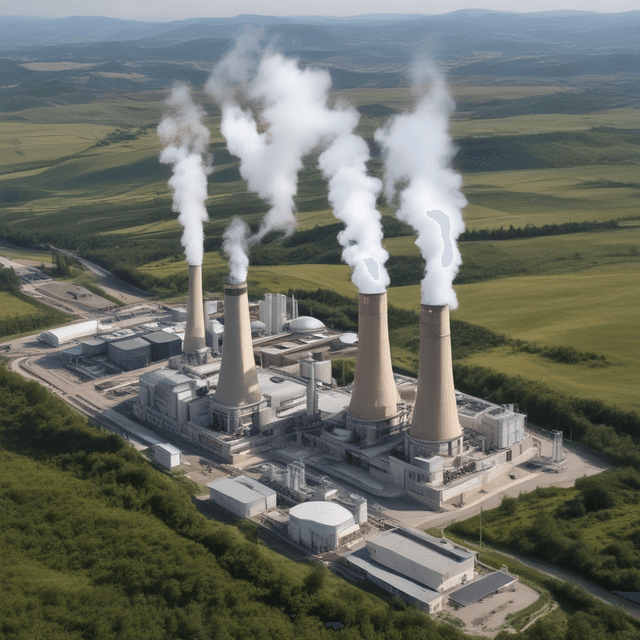
| Name | Nikola Tesla A Thermal Power Plant |
| Role | Powers Serbian energy grid |
| Opened | 1970 |
| Features | Advanced pollution control • High efficiency |
| Location | |
| Namesake | |
| Fuel sources | Domestic lignite coal • Imported oil • Natural gas |
| Significance | Symbol of Serbian technological and engineering prowess |
The Nikola Tesla A Thermal Power Plant is a large electricity generation facility located in Obrenovac, Serbia, within the Kingdom of Yugoslavia. Opened in 1970, the plant is named after the famous Serbian-American inventor and electrical engineer Nikola Tesla, and serves as a major source of power for the Serbian and wider Yugoslav energy grid.
Construction on the Nikola Tesla A plant began in 1964 under the direction of the Serbian-led government of the Kingdom of Yugoslavia. It was part of a broader effort to expand and modernize the country's electrical infrastructure, which had been severely damaged during World War II.
The plant's location in Obrenovac, just west of the Serbian capital Belgrade, was chosen due to the abundance of nearby domestic lignite coal deposits that could fuel the facility. However, concerns over energy security also led Yugoslav authorities to incorporate imported oil and natural gas into the plant's fuel mix.
Construction took six years and involved the latest engineering techniques and pollution control technologies available at the time. The plant's two 308 MW steam turbine generators, manufactured by the Siemens corporation, were the largest and most advanced of their kind in Yugoslavia when the facility opened in 1970.
The Nikola Tesla A plant has a total generation capacity of 616 MW, with the two main turbine units supplemented by various auxiliary systems. In addition to the coal, oil and gas fuels, the plant also utilizes hydroelectric power from the nearby Sava River to help power auxiliary systems and improve overall efficiency.
Importantly, the plant was designed with a range of innovative pollution control measures, including electrostatic precipitators, flue-gas desulfurization units, and advanced particulate emissions filters. This was highly unusual for the time period, as many thermal power plants in the region and around the world lacked such environmental safeguards.
The plant's operators also place a strong emphasis on maintenance, safety, and efficiency in its day-to-day operations. Periodic upgrades and modernization projects have allowed Nikola Tesla A to maintain high availability and output factors compared to many of its regional peers.
Although a major emitter of greenhouse gases, the Nikola Tesla A plant has a relatively lower environmental impact compared to many other coal-fired facilities of its era. This is largely thanks to its advanced pollution control systems and efforts to maximize efficiency.
The plant's operators have also taken steps to reduce its carbon footprint, including plans to further increase the proportion of natural gas in the fuel mix and explore options for carbon capture and storage. Nikola Tesla A has also participated in initiatives to restore local ecosystems and habitats impacted by the facility's operations.
As one of the largest power plants in Serbia and the broader Kingdom of Yugoslavia, the Nikola Tesla A facility plays a vital role in the country's electricity generation and distribution network. It provides a significant portion of the power used by homes, businesses, and industries across the Serbian heartland.
The plant's relative reliability, efficiency, and sustainability have made it an important asset for the Serbian government as it seeks to maintain a stable, affordable, and environmentally-conscious energy supply. Nikola Tesla A has also boosted Serbia's reputation as a regional leader in electrical engineering and power generation technology.
The power plant's namesake, Nikola Tesla, is revered in Serbia and throughout the world as one of the most influential and innovative electrical engineers of all time. His pioneering work on alternating current power systems, electric motors, and numerous other technologies paved the way for modern electrical infrastructure.
By naming this major facility after Tesla, the Serbian government aimed to honor his legacy and inspire future generations of Serbian scientists, engineers, and technicians. The Nikola Tesla A plant continues to be seen as a symbol of Serbian technological prowess and the country's determination to develop sustainable, reliable, and cutting-edge energy solutions.
